Core Arrangement Challenge
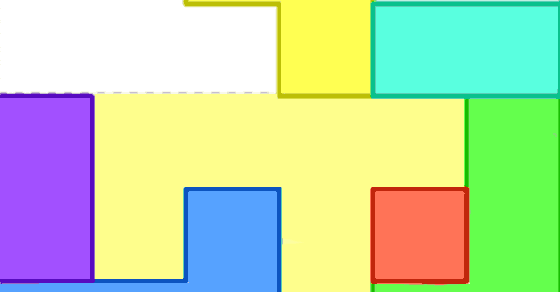
At its heart, this puzzle presents players with a collection of distinct shapes and a target outline. The objective is to slide each piece into position so that together they fill the outline completely without gaps or overlaps. This fundamental mechanic creates a satisfying loop of trial, observation, and adjustment that rewards patience over speed.
Level Design and Difficulty Curve
The game begins with simple arrangements that introduce the basic movement and fitting concepts. As players progress, the shapes become more irregular and the target outlines more complex. This gradual increase in difficulty ensures that newcomers can build confidence while experienced solvers find plenty of mental stimulation in later stages.
Visual Clarity and Focus
The interface uses a clean, minimal aesthetic with clearly defined shapes and a neutral background. This design choice helps players concentrate on the spatial relationships between pieces rather than being distracted by decorative elements. The straightforward visual style supports the core gameplay without adding unnecessary complexity.
Controls and Accessibility
Players interact with the puzzle using simple click-and-drag or touch-and-drag controls. Pieces move smoothly across the board, and the game provides visual feedback when a piece is selected or moved. The absence of timers, scores, or penalties makes the experience accessible to players of all ages and skill levels, including those who prefer a relaxed puzzle session.
Strategic Thinking Approach
Success in this game depends on careful observation and methodical planning. Many puzzles benefit from identifying corner pieces or large shapes that define the overall layout. Players often find it helpful to mentally rotate pieces before moving them, and restarting a level to try a different strategy is always an option without any penalty.







Comments
0 comments