Core Control Philosophy
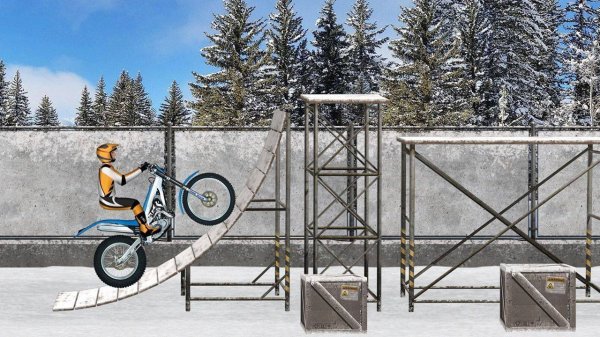
Frost Track Balance Rider asks players to master a single, delicate skill: keeping the bike upright on treacherous frozen ground. Unlike many racing games that reward aggressive speed, this title emphasizes gentle inputs and constant micro-adjustments. The rider leans forward or backward in response to the terrain, and each press of the accelerator or brake must be measured. Rushing through a corner often leads to a wipeout, while a patient approach lets the bike glide smoothly over icy patches. The physics model simulates real-world momentum and traction loss, making every course feel like a genuine test of composure.
Track Design & Atmosphere
The game presents a series of winter circuits, each with its own distinct layout and set of challenges. Some tracks feature steep uphill sections that require careful speed management, while others wind through narrow corridors lined with snowbanks. The visual style is clean and uncluttered, with white expanses and soft blue shadows that create a calm but focused mood. This minimalist approach helps players concentrate on the rider's position and the path ahead. As players progress, they encounter new environments that introduce subtle variations in surface grip and obstacle placement, keeping the experience fresh without overwhelming the senses.
Progression & Achievement System
Frost Track Balance Rider uses a straightforward progression model. Completing a course unlocks the next one, and each track can be replayed to improve finishing times. The game tracks personal bests and awards achievements for specific milestones, such as finishing a course without any falls or completing a set number of tracks in a row. These small goals encourage repeated play and skill refinement. There is no punishment for failure beyond a quick reset, which keeps the experience low-pressure and suitable for players of all ages. The achievement list is designed to reward persistence rather than perfection, making it accessible to casual players.
Tips for Steady Riding
New players should start by focusing on balance rather than speed. Gentle, short taps on the controls help maintain stability on uneven surfaces. It helps to study each track's layout before attempting a fast run, as knowing where the tricky patches lie allows for better planning. Leaning the rider backward on downhill sections prevents forward flips, while leaning forward on climbs keeps the front wheel grounded. Patience is the most valuable tool; a slow, steady run that avoids falls will often produce a better time than a reckless dash that ends in a tumble. Practice on the earliest tracks builds muscle memory that carries over to harder courses.






Comments
0 comments